TOURISM IN NEPAL
Nepal in its 147,181 km2. treasures more contrasts and variety of climates than most countries that have 20 times its size. Nepal's landscape squeezes the lush tropics and arctic tundra into an incredibly small space. The altitude ranges from just above sea level to reaching the roof of the world on Mount Everest with its 8,848 m. This ancient Himalayan kingdom, today converted into the Federal Democratic Republic of Nepal, has a great variety of ancient cultures in contrast to one of the most spectacular landscapes in the world, Nepal is a country of great discoveries and unique experiences, a truly fascinating country. Nepal was opened to the world in the 20th century in 1950 and today, the continuous growth of tourism, without a doubt, is one of the most important pillars of the country's economy, which allows them to grow year after year until the Current situation. The sensational information, the stories, the books, the movies and the documentaries dedicated to Nepal are not enough to explain the charms of this singular country raised in the heart of the Himalayas. The written history of Nepal begins with the coming to power of the Lichhavis dynasty in 400 AD. With them, Nepal prospered in art, culture, painting, architecture and sculpture. The Malla dynasty that succeeded them gave a new direction to that prosperity, transforming the small kingdoms of Kathmandu, Lalitpur and Bhaktapur into authentic open-air museums of art and architecture. Centuries later the Democratic Revolution of 1951 marked a new era for the opening of tourism in Nepal. The doors of Nepal were opened wide to foreign visitors, being admired and praised by travelers and writers from all over the world.
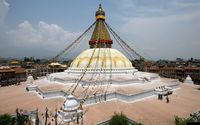
FOTO 1
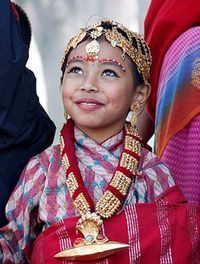
FOTO 2

FOTO 3

FOTO 4
Nepal has been given names such as "Living Cultural Museum", "Shangri-la", "Roof of the World", "Country of the Living Goddess", "City of Pagodas", "The Land of the 8,000-meter High Peaks". m. "Amphitheater of Nature". It is second to none that the sheer diversity that Nepal boasts, from the humid rainforest and Terai to the snow-capped peaks of the highest mountains on Earth, means the range of activities on offer. Trekking, mountaineering, rafting in spectacular landscapes are just three things that Nepal is famous for. Activities as diverse as Elephant Polo and an ultralight flight over the Himalayas show that in Nepal the only limit is our imagination. With 15 National Parks and Wildlife Reserves (two are UNESCO World Heritage Sites), Nepal is one of the last places on earth where you can see the Asian unicorn white rhino and the Royal Bengal tiger.
For many, Nepal's greatest attraction is its people. The traditions and famous hospitality of its ethnic groups are indeed an important part of what makes Nepal so special. From the remote mountain villages to the medieval hill towns and ancient valley cities of Kathmandu or Pokhara, the people of Nepal are always hospitable and extremely welcoming. Traveling to Nepal allows us to experience its rich cuisine with strong and intense flavors, discovering a wide variety of dishes prepared with love and delicacy with deep flavors. Surely, traveling to Nepal we will have the opportunity to attend and witness one of the many festivals that are celebrated throughout the year. In fact, with more festivals than there are days in the year, there is no other place in the world that can offer as many celebrations as Nepal. Tourism is a very important source of foreign exchange and income for Nepal. One of its most important attractions is having 8 of the 14 highest peaks in the world (Dhaulagiri, Annapurna, Manaslu, Cho Oyu, Everest, Lhotse, Makalu and Kangchenjunga).

FOTO 5
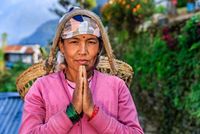
FOTO 6
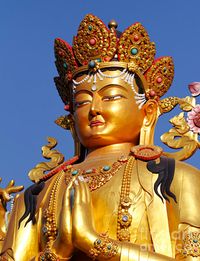
FOTO 7

FOTO 8
Nepal is the most important destination in the world for trekkers, mountaineers, climbers and people from all over the world, who seek to live intense experiences and adventures in the valleys and mountains of Nepal, a unique destination for athletes and nature lovers. Making a trip to this unique country will allow us to discover places of the world's cultural heritage, the cradle of such important religions as Hinduism and Buddhism. Nepal is the country of Everest (Sagarmatha, Chomolungma), the highest peak in the world, It is also the birthplace of Siddhartha Gautama, the man who became Buddha (the title means "The Enlightened One") in the current population of Lumbini was born as a prince of the Sakya clan that ruled Kapilvastu, a small independent kingdom located in the Indian plains. There are other important religious pilgrimage sites throughout the country for followers of various sects and religions.
Expeditions to the highest peaks on earth, trekking and other types of adventure tourism and ecotourism are major draws for travelers to Nepal from all over the world. Gradually Nepal has become one of the tourist destinations with the greatest future in Asia. That is why we hope that your experience in Nepal is as positive as possible and that in the future you can return to Nepal to see other places in this unique and diverse country known internationally as the "Country of the Himalayas". The tourism industry in Nepal is perceived as a way to alleviate poverty levels and as helping to achieve greater social equity in the country. For this reason, we believe that the promotion and development of the tourism industry will allow for sustainable development and a strong push to develop the country's economy.
Nature tourism
The main tourist activities in Nepal include activities in nature and specialties of adventure tourism, such as mountain biking (BTT), bungee jumping, rock climbing, mountain expeditions (himayalismo), trekking, bird watching , mountain flights in ultralight planes, paragliding, hang gliding, hot air balloon flights over the Himalayan mountains, exploring the waterways by rafting, kayaking, canoeing, rafting, canyoning, canyoning and safaris through the jungle, especially in the Terai region.

FOTO 9

FOTO 10

FOTO 11
Cultural and Heritage Tourism Kathmandu, the capital of Nepal, is a museum city, and its valley is very rich and diverse in cultural heritage. As an example we have that within an approximate radius of 7 km there are 7 places declared World Heritage Sites by UNESCO (Pashupatinath Temple. Boudhanath Stupa, Swayambhunath Stupa, Changunarayan Temple, Kathmandu Durbar Square, Patan Durbar Square and Bhaktapur Durbar Square ) this important heritage concentration cannot be found anywhere else in the world. The museums in Kathmandu have important collections of archaeology, history and art and their galleries exhibit important works of art from both the past and the present. Full of art, architecture and culture, the Kathmandu Valley is the main destination for cultural tourism in Nepal.
Religious tourism
In recent years, religious tourism has experienced significant growth. Nepal is a multi-religious society. The main religion in India is Hinduism, and the Pashupatinath Temple, one of the main religious places for Hindus in the world and located in Kathmandu, attracts many Hindu pilgrims and tourists from all over the world during the year. Other Hindu pilgrimage sites include the temple complex at Swargadwari located in Pyuthan district, Gosainkunda Lake near Dhunche in the Langtang (North Kathmandu), the temples at Devghat, Manakamana temple in Gorkha district and Pathibhara near Phungling, Mahamrityunjaya Shivasan in Palpa district, where the largest metal idol of Shiva is located.
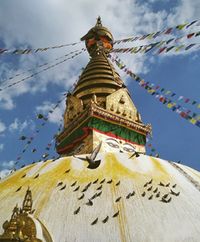
FOTO 12

FOTO 13

FOTO